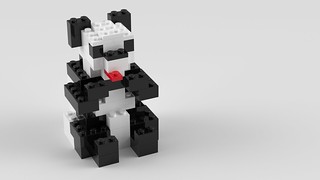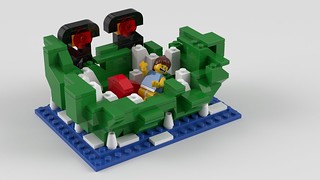
Although I enjoy seeing the finished product of my LEGO renders, it is the process that engergizes me. The acts of learning, refining, and failing each add to my body of knowledge. Let’s explore some of that using my 8029 Mini Snowspeeder.
It feels like 2017 is just kicking off, yet here we are at the end of January. Time sure seems to be getting away from me lately. I blame the the heater skelter of the holidays and uncomfortable weather. Well, and taking a not so great vacation didn’t improve my mood any. I got sick and all else fell to the side. Today is my opportunity to change that. Today is for LEGO!
“Agent 51, your goal is within reach, but there is a problem.” “Understand,” you reply. Professional as always, you only allow a hint of annoyance in your voice. “Explain.” “Well, the plans are in the room in front of you, but the floor is a trap. You need to deactivate it using the terminal to your right.” You look down at the screen, a singular “READY” stares back at you. “Sounds easy enough,” you reply. “It isn’t. The interface is protected and, sadly, our operative died before he could tell us the code.” “So what do I do?” “You’re going to have to hack it. Our operative left a back door into the system, if you can find it. You can do it, Agent 51.” You nod at the voice in your ear. You can do this. Play begins with imagination. Computers are great for role playing and Code IV was one of my programs that helped enable a story. As a kid, I often augmented my play using my ZX81. Although the narrative above isn’t exact, it embodies what I was thinking when I wrote this month’s ZX81 program. Fun, adventurous, and unfair, can you crack the code and disable the floor?

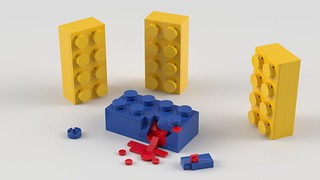
At the end of November, during some time off from work, I dabbled rendering a series of LEGO models I call Big Bricks. Starting out as a “can I do this?” effort, led to me building variations on that theme. To my surprise, the journey culminated with the blogging of Crime Scene on the Brothers Brick.
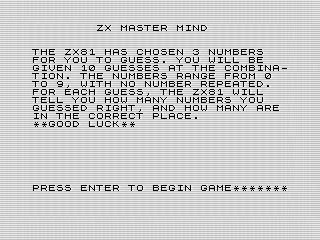
I used to play Mastermind when I was a kid, a simple code breaking game. One player would set up a sequence of colored pegs and the other would have to guess it in a set number of turns. My version, called ZX Master Mind, has the computer creating the code. Can you guess the three numbers in sequence before your ten turns run out?
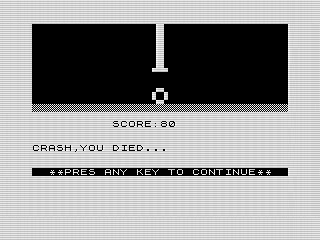
Dodging games were the rage back in the early ’80s. Wanting to add my own take on the genre, I created Stick Shift, November’s program of the month. The goal is simple. Dodge other cars, oil spills and spikes while not crashing into the wall. Mess up? Well, it’s game over for you. Don’t fret though, it isn't that hard—yet.
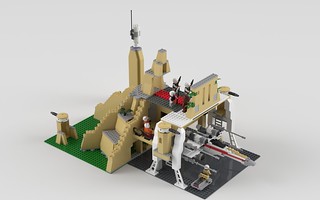
Inspiration flows from various sources. For some time I’ve wanted to create a messy model, one with greebles and imperfections. A space article about a moon—I don’t remember which—provided the push I needed. With Frank Sinatra’s In Other Words playing in my head, I headed over to Mecabricks and started building.
While working to improve the way I display my ZX81 programs, I ran across one that didn’t have a picture. Finding that odd, I did some research and found that I’d written a page for it back in 1999. To my surprise, I’d never uploaded it. To rectify that oversight, I made Bugers this month’s program.
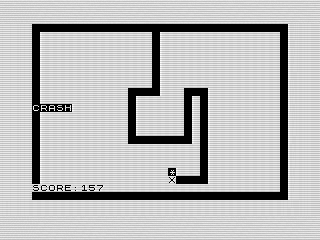
One of the coolest movies when I was a young teenager was Disney’s Tron. What geeky kid didn’t want to watch a movie about computers and video games? Sprinkle in some computer animation and how could I not fall in love. Needless to say, Tron was the inspiration for more than a few of my programs. Trail Blazer, September’s program of the month, is one of them. An homage to the light cycle segment, the goal is to crash your opponent first. But beware. All walls are deadly, including your own.
Inspiration and Milk Trucks.It was sheer luck that I found my latest build. Searching for a LEGO sticker set, I happened across this Milk Truck. As soon as I saw it, I knew I had to render it. As Ive mentioned before, I’m a sucker for old LEGO sets, although I like modern ones too. Lucky or otherwise, there is a method to my madness. Join me for a few minutes and learn the fives ways I discover new models to render.
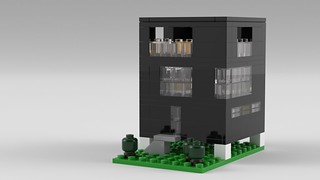
Meandering around Flickr, I ran across a picture of Floating cube houses Havneby Rømø island Denmark by Arkitema Architects. With black walls and expansive glass windows, the design was striking. Inspired by the modern lines, I pictured how they might look in LEGO bricks. Below is the result of me acting on that inspiration.
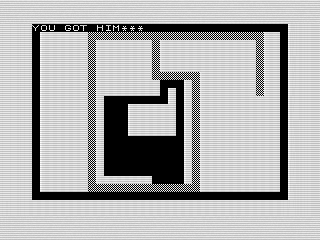
I painted more borders on the ZX81 than just about any other shape. An easy way to confine movement, it shouldn’t come as a surprise that Electon starts by building a box. And before you ask, this month’s ZX81 program isn’t another version of snake. Instead, you use the Z, X, N, and M keys to move in an attempt to capture the Electon. Sounds easy? Better give it a try and see.
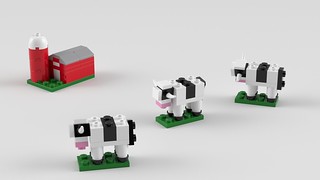
I follow a number of LEGO sites through RSS feeds, looking for inspiration on what to render next. A long time back, I booked marked this article, Build the Big E Cow. It was small, had instructions, and was kind of cute. Something my wife would like. I booked marked the site, thinking someday I’d get back to it. I finally did.
Hard to believe, but 20 years ago I started dabbling with POV-Ray to render models with virtual LEGO bricks. Set 373, my second rendered model, is over 20 years old now. Started in April of 1996, it’s seen many iterations over the years. This month I decided to build it once more—this time using Mecabricks and Blender.
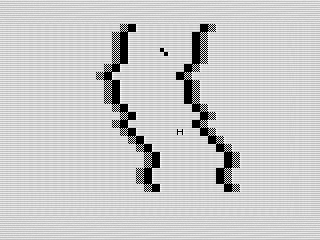
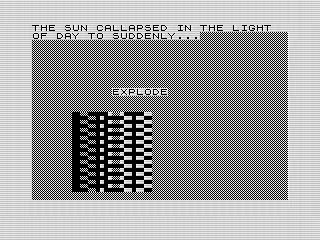
Not everything I wrote on the ZX81 was a game, although I did write a lot of those. In fact, some of my first computer programs did nothing more than print pictures. 3D Image, a badly named program, is one of my experiments in animation on the ZX81. Depicting a sun at the end of its life, it’s a uses simple math to generate an image.
Practicing a “get it done” attitude, I've recently added a constant stream of features to my site. Most visitors wouldn‘t notice. They aren‘t dropping by to relish my web design, nor are they interested in my latest tweaks to enhance their experience. Nope, they‘re here to read an article. Or, more likely, they‘re lost—but I digress. If the content is there, the looks, assuming the basics are present, is secondary.
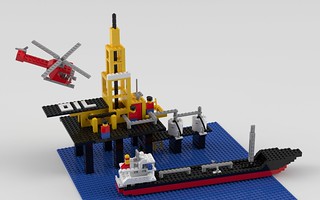
“Beware what lurks beneath the sea. Sharks, you say? No, not sharks. Something much, much worse. It comes from below and you’ll never see it until you find its maw enveloping you. What’s that? You don’t believe me? Sonny, I’ve seen it. I barely escaped myself when it took a liking to our boat.” Cheesy story aside, this is anotherof my older LDD models from 2010, converted and tweaked to use Mecabricks.
I’ve been a long time Star Trek fan, predating Star Wars by a few years. I have fond memories of watching the original series in re-runs, but it was TNG that rekindled my fandom. I even went to a convention while living in Indy. So, it should be no surprise that I built a version of the Enterprise D using only basic LEGO bricks. This is the story of my attempts at rendering it.
“Jealous of Vargen’s accomplishments, a rival kingdom has attacked and kidnapped your king. As head Knight, you mount a quest to return the King, hidden somewhere in the forest by his captors. But hurry! The King's ransom has a time limit. Can you find the King in time and restore the Vargen Crown?” Sounds great right? An adventure game set in a single screen. I had high hopes for Vargen Crown. Castles, keys, and puzzles, our program of the month covered the basics of adventure. Using just the ZX81 cursor keys, playing it will leave you unsatisfied and, I suspect, quite frustrated. It’s too bad as the game has a decent look to it. I chalk it up to being a young programmer, but that's not an excuse. Still interested? Let’s dig in and see what makes this game tick.
Up until now, all my Mecabricks work has been from me importing models. Sure, I’d tweaked a few pieces here and there, as I noted in my last post. Yet, I was still designing them in LDD and exporting them to render in Blender. LEGO model 352 is my first attempt at building something only in Mecabricks.