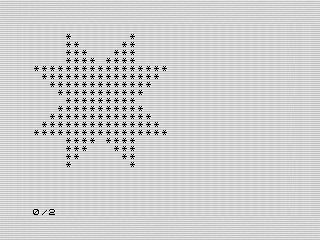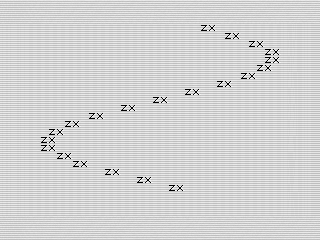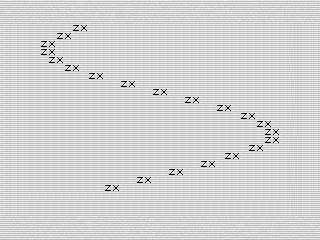
I missed the Dec 26 deadline for submitting, but did get a star working on the ZX81. My attempt isn’t spectacular, but it does work. I recommend checking out the other entries for Vintage Christmas Star Challenge.
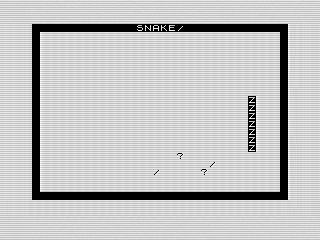
I’ve been on a retro computing binge lately and was recently watching one on programming on what it was like to program in the 80’s. Having lived and programmed during that time, I know full well what that was like. But the narrator was showing off an Apple ][+, a computer I didn’t own. Although I programmed on an Apple ][ in high school, my memory of it is vague at best. But what was really interesting was what he was programming: a snake game. Being something I’d never tried myself, I thought now would be as good time as any.
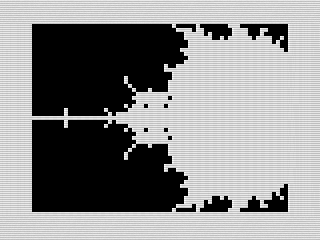
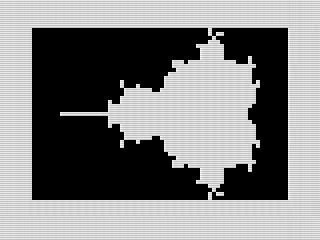
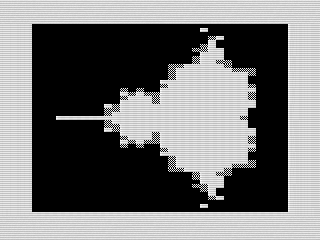
Fun with Mandelbrot sets. I never thought I’d say that, but here I am doing just that on the ZX81. I ran across some fun discussions on them. They are often used as benchmarks, but I just wanted to create some interesting pictures. This is my version using Sinclair BASIC that creates a few interesting ones.
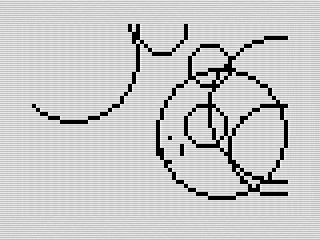
I ran across a ZX81 forum post showing a fast way to print a circle in BASIC. It was based on an article for the Atari back in 1983. I was surprised how fast the routine was and wondered how it would in assembly. Long story short, I built a screen saver for the ZX81. Sure, the ZX81 really didn’t need one, but the circles are fun to watch.
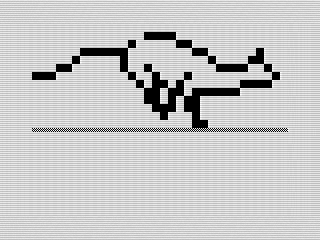
I had this idea on Sunday that led to today’s program—more about that in a minute. One of those sit down and do it programs, I banged this out pretty quick yesterday. Not wasting time, I decided today I’d share it. Road is a very simple program that I never intended to make. But here it is, so lets talk about it more.
Wandering through Mecabricks the other day, I ran across a fun pair of Mini-Katana’s by Shipmaster. Digging deeper, I also discovered his excellent Katana. Both models really appealed to me. Given my recent binge watching of Forged in Fire, both made for excellent subjects to render. As is usual for me, I promptly saved the models and fired up Blender.
Over the last month, I’ve been doing some housekeeping on my website. I’ve had a few lingering issues to take care of. Unsurprisingly, this led me down a few different paths. From simple fixes to big ones, I’ve made a few subtle changes that impact the feel of my site. Hinted at in my change log, I wanted to dive a bit deeper into the adjustments made thus far.
January has rolled around and it felt fitting to update my blog’s title screen image for the New Year. I was fortunate enough to get away to warmer areas and was able to capture this picture. It is my mood of late, looking out towards the horizon. My goal is to make this blog relaxing and open, a refreshing place to come and enjoy life for a bit. Perhaps a lot of what I share is looking back with my retro work. But there is that mystical quality to it all. If anything, I can relax with a drink each time I visit my site. Hope you can as well.
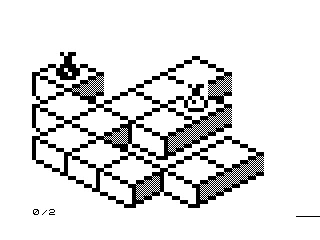
For years, Water Bug II has been an interesting game for me. I was so excited when completing the first version, that I wanted to build another one with ten more boards. The funny thing is, the two games look a lot alike. In fact, if you weren’t paying attention, I wouldn’t be surprised if you thought you were playing the same game. Let’s dig deeper on both the similarities and the differences.
For most of the day, I’ve been thinking about my Water Bug game as I never really gave it a proper write-up. Finally got around to playing it again, I was surprised to find elements in that I thought were unique to Water Bug II are actually in this version. That made me want to walk through each board, understanding better what I had done, what worked, and what didn’t. Let’s dive right in.
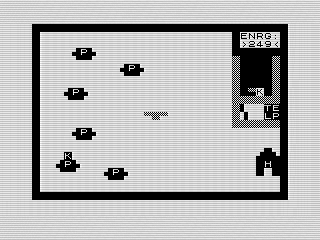
Like many teenagers in the early eighties, I was playing video games on my Atari VCS. Yars’ Revenge was a popular purchase, and I spent many hours dodging that stupid missile and trying to take down the shields of the Qotile. It then should come at no surprise that I tried to recreate that game at 13. My attempt on the ZX81 didn’t look horrible, but it sure played bad. Let’s see how much.