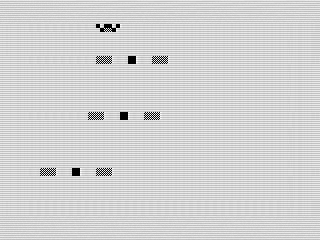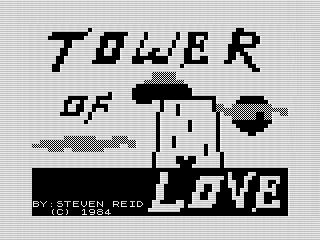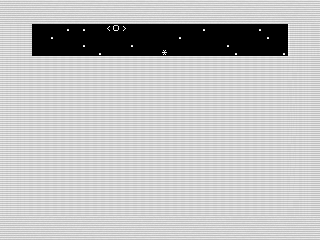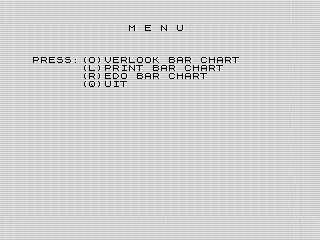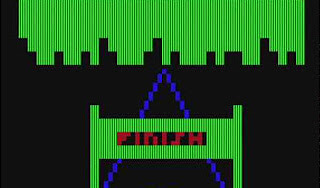
Nothing starts the year out better than a space shooter. The top of the printout was quite faded, so I wasn’t sure about ZTSXXSTZ when I started to type it in. But, once I got the first few bits working I realized I had something worth sharing.
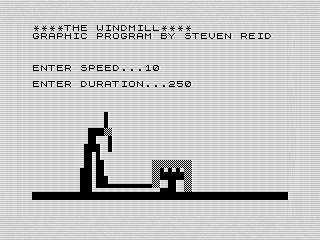
There are a ton of windmills in Idaho. Mostly big ones for power, but you see a few smaller ones used for irrigation and wells. But, when I wrote this month’s program, I couldn’t remember any being around where I lived in Indiana. No matter. I still wrote a simple windmill animation, and today is the day to share it.
Tarantula, August’s program of the month, was part of a pair of games that made me think I was a game developer. At the age of fourteen, I didn’t let problems like the lack of a distribution channel tarnish my dreams. Although I didn’t make it into gaming, it’s still fun to look back on what could have been.
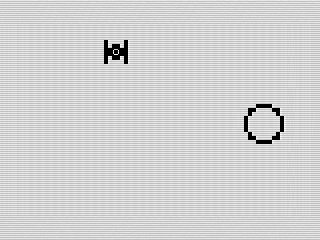
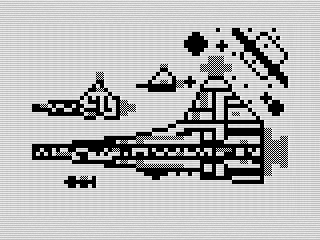
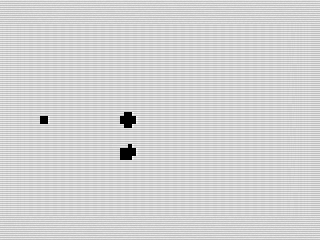
Foreign to many developers today, I have a notepad and binder full of ideas from my ZX81 days. The notepad contains early program snippets. In contrast, I have sketches and designs crammed into a binder. Flipping through it, I landed on a Star Wars sketch that became the basis for this month’s program.
“Agent 51, your goal is within reach, but there is a problem.” “Understand,” you reply. Professional as always, you only allow a hint of annoyance in your voice. “Explain.” “Well, the plans are in the room in front of you, but the floor is a trap. You need to deactivate it using the terminal to your right.” You look down at the screen, a singular “READY” stares back at you. “Sounds easy enough,” you reply. “It isn’t. The interface is protected and, sadly, our operative died before he could tell us the code.” “So what do I do?” “You’re going to have to hack it. Our operative left a back door into the system, if you can find it. You can do it, Agent 51.” You nod at the voice in your ear. You can do this. Play begins with imagination. Computers are great for role playing and Code IV was one of my programs that helped enable a story. As a kid, I often augmented my play using my ZX81. Although the narrative above isn’t exact, it embodies what I was thinking when I wrote this month’s ZX81 program. Fun, adventurous, and unfair, can you crack the code and disable the floor?
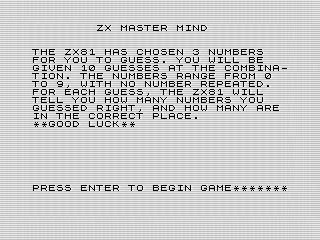
I used to play Mastermind when I was a kid, a simple code breaking game. One player would set up a sequence of colored pegs and the other would have to guess it in a set number of turns. My version, called ZX Master Mind, has the computer creating the code. Can you guess the three numbers in sequence before your ten turns run out?
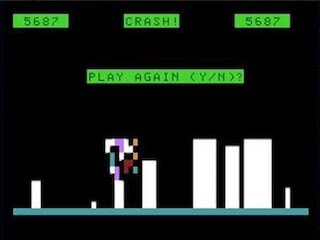
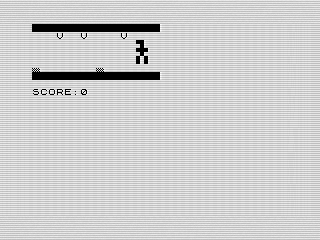
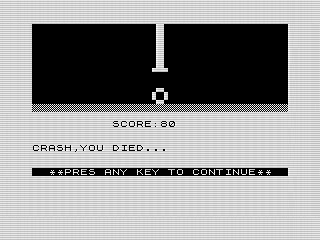
Dodging games were the rage back in the early ’80s. Wanting to add my own take on the genre, I created Stick Shift, November’s program of the month. The goal is simple. Dodge other cars, oil spills and spikes while not crashing into the wall. Mess up? Well, it’s game over for you. Don’t fret though, it isn't that hard—yet.
While working to improve the way I display my ZX81 programs, I ran across one that didn’t have a picture. Finding that odd, I did some research and found that I’d written a page for it back in 1999. To my surprise, I’d never uploaded it. To rectify that oversight, I made Bugers this month’s program.
One of the coolest movies when I was a young teenager was Disney’s Tron. What geeky kid didn’t want to watch a movie about computers and video games? Sprinkle in some computer animation and how could I not fall in love. Needless to say, Tron was the inspiration for more than a few of my programs. Trail Blazer, September’s program of the month, is one of them. An homage to the light cycle segment, the goal is to crash your opponent first. But beware. All walls are deadly, including your own.
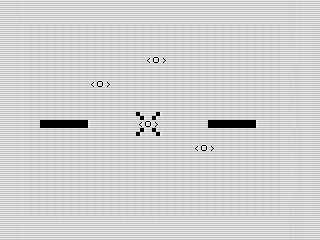
I painted more borders on the ZX81 than just about any other shape. An easy way to confine movement, it shouldn’t come as a surprise that Electon starts by building a box. And before you ask, this month’s ZX81 program isn’t another version of snake. Instead, you use the Z, X, N, and M keys to move in an attempt to capture the Electon. Sounds easy? Better give it a try and see.
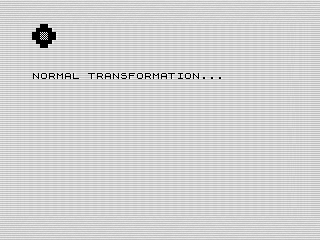
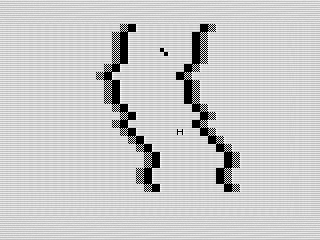
Not everything I wrote on the ZX81 was a game, although I did write a lot of those. In fact, some of my first computer programs did nothing more than print pictures. 3D Image, a badly named program, is one of my experiments in animation on the ZX81. Depicting a sun at the end of its life, it’s a uses simple math to generate an image.
“Jealous of Vargen’s accomplishments, a rival kingdom has attacked and kidnapped your king. As head Knight, you mount a quest to return the King, hidden somewhere in the forest by his captors. But hurry! The King's ransom has a time limit. Can you find the King in time and restore the Vargen Crown?” Sounds great right? An adventure game set in a single screen. I had high hopes for Vargen Crown. Castles, keys, and puzzles, our program of the month covered the basics of adventure. Using just the ZX81 cursor keys, playing it will leave you unsatisfied and, I suspect, quite frustrated. It’s too bad as the game has a decent look to it. I chalk it up to being a young programmer, but that's not an excuse. Still interested? Let’s dig in and see what makes this game tick.
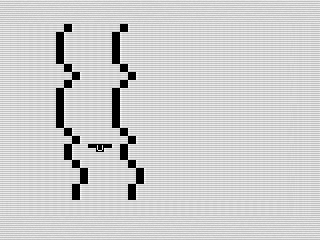
Walls and creatures always make for a nice game and Faller, our program of the month, has both. It takes a bit of imagination, but watch the icky spider climb up the wall towards you. Their goal, of course, is to knock you off and claim the wall for themselves. Like any good hero, you sit at the top and move over the spiders using Z and .. But be quick and knock them off using M to save the day. Just don’t be a faller should you miss.
April is close to wrapping up and I was able to find time this weekend to type in another ZX81 game. Laser Blast, this month’s program, has you saving the world. Kind of cliché I know, but hey this was 1984. George Orwell’s novel didn’t come true, but at least we could blast alien’s with lasers. Use the Z and . keys to move and M to shoot your ray of death. But beware. The alien has a guided missile and it’s heading right for you.
I often search around the web looking to see what kind of ZX81 community still thrives. I truly expected to find a community in decline, but a surprising number of nostalgia sites are still out there. I found some dedicated to hardware, some to emulating, and others to software. Some are reference sites offering up tips and how to do things. Others simply have reviews of software from a different era. All of them interesting in their own way.
February is upon us and that means another program of the month. This month it is another one from 1983: Light Walls. In case you hadn’t guessed, it has its roots in Tron. The game requires you to steer right (“.”) or left (“z”) to avoid hitting the light walls. I wrote this program while a friend was over and we took turns trying beat others high scores. Who says you need color and 3D graphics to have a good time! Not convinced. Give it a try yourself and see how good your reactions are.